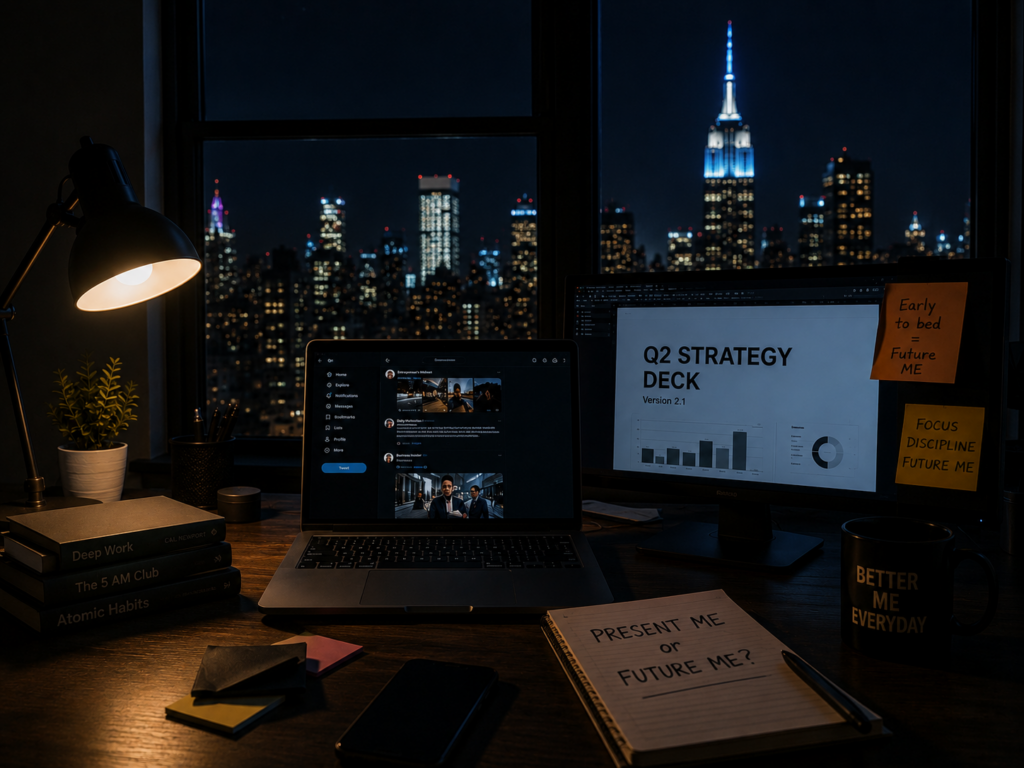

You are probably reading this at a time when you should already be asleep.
And if that sentence made you pause, even for a second, then this article is for you.
Something is being stolen from you every night, not by a person, not by bad luck. It is being stolen by a habit so normalised that most people never question it: the habit of sleeping too late.
It often starts innocently. You tell yourself you will go to bed in a few minutes. Just one more episode. Just one more scroll through social media. Just one more message to reply to.
Before you know it, midnight has passed. Your body is tired, but your mind is still active. You begin calculating how many hours of sleep you can get before the alarm rings, promising yourself that tomorrow will be different.
The truth is, you are not alone in this.
RAND Corporation, in one of the most comprehensive studies of its kind, found that sleep deprivation costs the United States over $411 billion a year in lost productivity. Japan loses $138 billion. Germany: $60 billion. The United Kingdom, $50 billion. And those are just the economies with the data to measure it.
The cost in human potential, in Africa, in Southeast Asia, in every corner of the world where people are grinding and hustling and giving their all to build something better — that cost is incalculable.
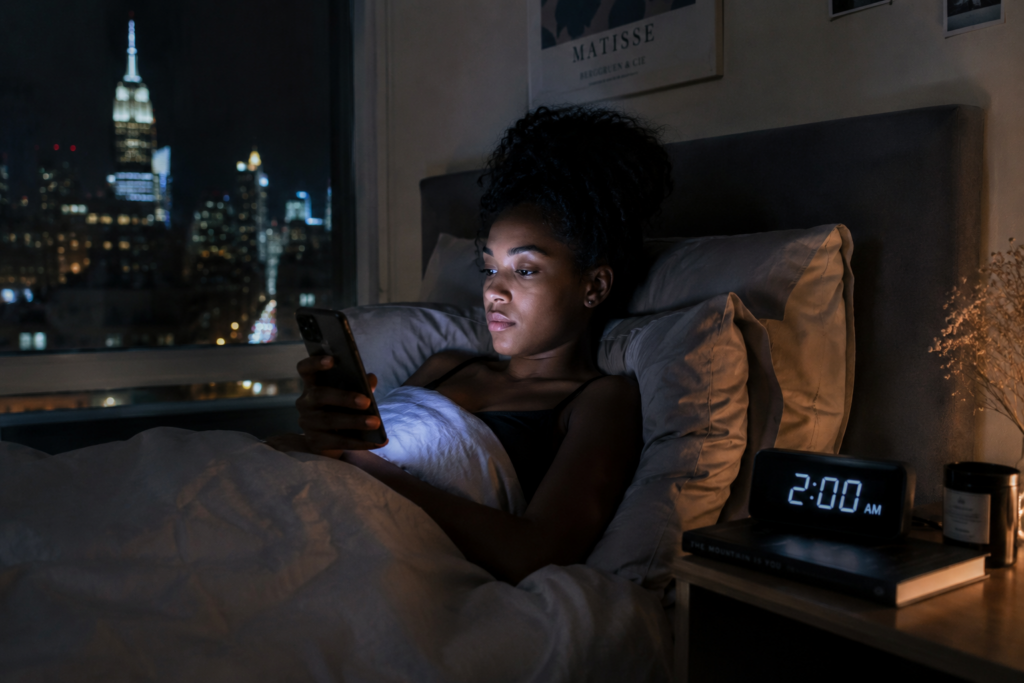
We have somehow convinced ourselves that sleeping less is a sign of dedication. That the person who stays up the latest is the most committed, the most driven, the most serious. But the science tells a completely different story.
People who regularly sleep fewer than six hours a night carry a higher risk of early death compared to those sleeping seven to nine hours. Sleep-deprived individuals make more errors on simple tasks, misread social cues, and struggle to regulate their emotions — all without knowing it, because poor sleep also impairs your ability to recognise how impaired you actually are.
We have been lied to about what productivity looks like.
The person who sleeps four hours and calls it a badge of honour is not performing at their peak. Every day they push through on insufficient sleep, they are simply borrowing energy, focus, and well-being from the next day. Over time, the cost becomes visible. Patience becomes thinner. Focus becomes harder to maintain. Creativity slows. Relationships suffer. Eventually, feeling tired becomes so familiar that we forget what it feels like to be fully rested.
A bedtime, kept faithfully, is perhaps the most underrated act of self-discipline in modern life. A 2024 Penn State study found that the consistency of a sleep schedule matters more than how long or how well you sleep. Children who went to bed at the same time each night showed significantly better emotional regulation and behaviour control than those whose bedtime varied. And the same principle holds for adults.

When we go to bed at roughly the same time each night, we help regulate our body’s internal clock, support emotional balance, improve learning and memory, and strengthen our ability to respond effectively to the demands of daily life and how we will respond to everything that comes at us the following day.
Henceforth, challenge yourself to approach bedtime differently. Choose a realistic time to sleep and commit to it for the next seven days. Spend a few minutes practising mindfulness or meditation before bed. The 42-Day Self-Development Programme can really help with this. Observe how you feel when you wake up. Pay attention to your focus, energy levels, and ability to stay present throughout the day.
You may discover that one of the most powerful productivity tools is not another app, planner, or time-management technique.
It is simply the discipline to go to bed on time.
So, what time is your bedtime starting tonight?



By 10pm i should be in bed
Wow! This is really profound👏👏
“Eventually, feeling tired becomes so familiar that we forget what it feels like to be fully rested.”
Thank you so much for this. I am definitely working on my sleep schedule from today.
Wowww, I really enjoyed reading this! I will definitely work on my bed time. My bed time starting tonight is 10:00pm.
Wawww.. this is an educative piece! I am so challenged to take my sleep time more seriously.
Thank so much Dr Tomiwa.
Thank you so much Doctor Tom for this amazing piece
As from today I’ll start sleeping as early as 10 pm now that I know the importance of sleep
Thank you so much Dr Tom for this, I am really challenged and I will work on myself from now on.
Wow. This is truly inspiring. I felt called out.
I am motivated to take my sleep seriously.
This is a very detailed and relatable piece. Consistency in sleeping pattern. I won’t promise to sleep by 10pm but I will sleep an hour earlier than my current pattern until I get to my ideal sleeping time. Thank you for this.
Thank you so much, Dr. Tom for this beautiful piece. This is really insightful and needed.
I enjoyed reading this, I must say. I felt this post was talking to me from the first sentence. I’m hoping to sleep by 10pm every day.
Thank you so much for sharing.
I never knew sleep really mattered I’ll adjust my sleep timetable thanks so much
Wow. This is truly inspiring.
I am motivated to take my sleep seriously.
Wow!! Sleeping late at night carry a higher risk of early death!! Oh my!! I’m changing my bed time routine.
Thank you so much, Dr Olutomiwa for this.
Thank you so much Dr for this…..I have to change my sleep pattern and hopefully I will try to sleep by 10pm
Thank you so much, Dr. Tom for this beautiful piece. This is really insightful and needed.
This is a beautiful piece and a masterpiece at that, so relatable and yes, it is enlightening.
Thank you Dr. Tom for this.
I’d stay conscious of sleeping more early and more consistently.
Thank you so much.
Woww.. This is so insightful. Thank you, Dr., for this piece.
It’s high time I took my bed time serious. By 10pm, I should be in bed.
I will ensure to regulate my body to sleeping for 7 hours in a day!. I look forward to the changes
I love this piece, my bedtime starts 12am.
We live in a world that sells us ‘hustle’ as a virtue, ignoring the massive economic and personal cost of sleep deprivation. Your perspective on this is crucial for modern professional development.