


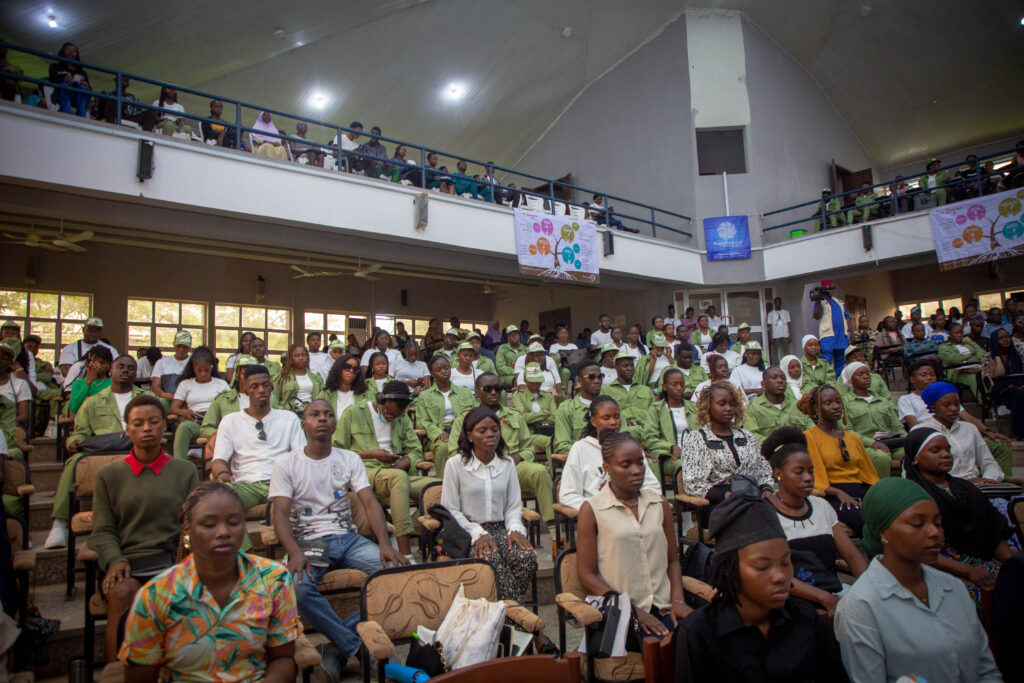
With a population of about 232.5 million, Nigeria stands as a major force in Africa. What truly defines the country, however, is its youth. One in every two Nigerians is under the age of 19. These young people are expected to drive progress and innovation, yet many are navigating intense stress, uncertainty, and emotional strain in their daily lives, frequently with few tools to manage it. Through meditation, people learn mindfulness, which is the ability to remain steady, flexible, and present even during moments of intense pressure.
Meditation is often misunderstood, especially among young Nigerians, who may associate it with religion, anti-African ideas, or foreign practices. But our study involving 840 Nigerian youths shows that when meditation is structured, supportive, and practical, it transforms perception and experience in measurable ways.
At the heart of this transformation is the 42-Day Self Development Program (SDP), a flagship initiative of the World Peace Initiative Foundation that blends guided meditation, daily reflection, habit-building, and personal mentorship into a comprehensive six-week journey. The SDP helps participants learn how to “be in charge of their mind,” letting go of unnecessary stress and building inner balance through meditation techniques such as deep breathing, visualisation, and mantra practice. Daily reflection, self-discipline lessons, a meditation journal, and support from a dedicated Peace Coach ensure participants are guided, supported, and encouraged throughout the process.
Our study used a mixed-methods design, combining closed-ended survey items to capture trends and percentages with open-ended questions to explore meaning and lived experience. This robust approach allowed us to capture not just what youths think, but why and how their perceptions evolved.
Before the self-development program, many respondents viewed meditation as abstract or irrelevant. Although most participants were aware of meditation, mainly through social media and books, their perceptions were deeply shaped by misconceptions. One participant said, “I thought meditation was only for monks.” Six in ten participants associated meditation with religion, and almost half of the participants said they did not know how meditation could apply to everyday stress.


After completing the SDP, perceptions shifted dramatically. Almost all of the participants who completed the SDP reported improved stress management. A majority also reported improved focus and stronger emotional control. One participant shared, “Meditation now helps me stay calm even on hard days.” Notably, more than 500 participants who initially saw meditation as religious no longer held that view after the program. As one respondent explained, “I used to think meditation was religious, but now I understand it as a mental health tool.” Another added, “It doesn’t affect my religion at all. It just helps me stay calm and focused.”
As nearly all 840 participants affirmed that meditation could positively impact individuals and society, they also offered practical insights for broader adoption of the SDP across the country. Some recommended mobile apps and online communities, while others emphasised peer support networks and community structures such as peace clubs.
This study shows that the 42-Day SDP is not a “small experiment.” It is a scalable and impactful model that equips young people with real tools for inner peace. By promoting mindfulness in a structured and culturally adaptable way, the SDP is helping Nigerian youths navigate stress, build resilience, and contribute to peaceful communities. When mindfulness is culturally sensitive, accessible, and practical, Nigerian youths do not resist it. They adopt it. For peacebuilding and youth wellbeing, this insight is powerful.
If you are a young person, professional, educator, peacebuilder, or anyone seeking clarity, balance, and resilience in today’s complex world, now is the time to begin.
Register for the 42-Day Self-Development Program here:
https://wpifoundation.org/en/self-development-program/4
Inner peace is not a luxury. It is a foundation.

